Curious about living where your front door can also support your workday? In Central East Austin, that idea is very real, but it is also more nuanced than many buyers expect. If you are exploring a property that could blend residential life with a studio, office, showroom, or small business use, understanding where live-work is actually realistic can save you time and protect your investment. Let’s dive in.
What Live-Work Means in East Austin
In Austin, live-work is not just a casual lifestyle label. It is tied to zoning, overlays, and site design rules that shape how a property can legally function. The City of Austin notes that mixed-use tools, including the Mixed Use Combining District and Transit Oriented Development areas, can allow residential, office, retail, and commercial uses within a single development.
That distinction matters because a property may feel like a live-work fit while still facing real limits on use, design, or permitting. In the Plaza Saltillo Station Area Plan, for example, live/work flex is described as mixed-use development that combines commercial, office, or light-manufacturing space with a residential unit for the business owner. The plan also frames this format as a way to support small business and artisan activity.
Austin’s mixed-use design standards add another layer. Subchapter E addresses practical details like sidewalks, pedestrian connections, parking, lighting, and building features. So when you evaluate a live-work opportunity, you are looking at both land use and how the site is designed to function.
Where Live-Work Is Most Realistic
If you are searching in Central East Austin, live-work opportunities tend to make the most sense in the city’s established mixed-use corridors and station areas. They are generally more plausible along planned urban corridors than on interior single-family blocks. That is an important starting point for any serious property search.
Plaza Saltillo TOD Areas
Plaza Saltillo is one of the clearest examples in East Austin. According to the station area plan, TOD Mixed-Use is concentrated along Comal, East 5th, and East 6th, while Corridor Mixed-Use appears along East 7th and the east end of the district. The plan also identifies Live/Work Flex on the south side of East 5th near Chicon and on the south side of East 4th.
What makes Plaza Saltillo especially useful for buyers is the city’s planning intent. The live/work flex areas are positioned as transition zones between the denser core and nearby neighborhoods. In practice, that means some parcels are designed to handle smaller-scale mixed activity better than others.
MLK TOD Opportunities
The MLK TOD offers another strong example. The station area plan includes a primary mixed-use area along MLK Jr. Boulevard at Alexander Avenue and a secondary node along Manor Road. It also includes live/work flex areas where small businesses can sit above residential units as a transition to surrounding neighborhoods.
For a buyer or owner-occupant, this can create a useful middle ground. You may find a setting that supports a business-facing use while still fitting into a neighborhood-adjacent environment. That balance is often part of the appeal.
East 11th and East 12th Corridors
East 11th and East 12th remain important parts of the broader picture. The Urban Renewal Plan identifies the East 11th corridor from Branch Street to Navasota Street and the East 12th corridor from the I-35 frontage road to Poquito Street. The city has described these corridors as key locations for new commercial and office redevelopment in Central East Austin.
East 12th also carries historic significance as a business corridor within the African American Cultural Heritage District between I-35 and Airport Boulevard. For buyers, that means context matters. These corridors may offer mixed-use potential, but each parcel still needs careful verification before you assume a live-work setup will be allowed.
East Cesar Chavez and Nearby Corridors
East Cesar Chavez adds another layer of nuance. City materials describe it as one of Austin’s oldest districts, with planning efforts that emphasize preservation of historic structures and affordable homes. This is a reminder that corridor character and planning goals can shape what is realistic on the ground.
Recent council action involving parcels on East 4th Street also shows how parcel status can change over time. In that case, property moved from Live/Work Flex to TOD Mixed Use. For you as a buyer, the takeaway is simple: live-work status is highly parcel-specific, and assumptions can be costly.
Why Corridor Location Matters
Austin’s broader planning framework helps explain why these areas stand out. Imagine Austin directs new development toward designated centers and corridors, with corridors functioning as linear areas that spread uses along roads rather than concentrating everything in one node. That citywide strategy supports why East Austin live-work opportunities tend to cluster along major streets and transit-connected districts.
If you are comparing options, this means corridor properties often deserve more attention than charming interior homes with a loosely defined work setup. A property may be visually appealing and still be a poor candidate for legal mixed-use activity. Location within the planning framework often tells you more than appearance alone.
What to Verify Before You Buy
A live-work purchase in Central East Austin usually requires more diligence than a standard residential purchase. Before you move forward, it is wise to confirm exactly what the city allows on that parcel today, not what a listing, prior owner, or neighbor believes is possible.
Confirm Zoning and Overlays
Start with the exact zoning and any applicable overlays. The City of Austin offers a Zoning Verification Letter, and the Land Development Code sets out zoning districts, permitted uses, and development standards. This is one of the clearest ways to ground your decision in current city records.
You should also confirm whether the parcel sits within a Mixed Use Combining District, a TOD subdistrict, a CURE district, or another special overlay. These layers can materially affect what uses are allowed and how the property can operate. A mixed-use address does not automatically mean every type of live-work arrangement is permitted.
Review Site Plan Requirements
Ask whether a site plan, site plan exemption, or change of use review is required. Austin states that site plans review zoning, design standards, drainage, floodplain, water quality, transportation, environmental issues, erosion control, and tree protection. A site plan is required for non-residential site work or a change of zoning use unless the property qualifies for an exemption.
This is often where buyers realize a live-work property can behave more like a regulated commercial asset than a simple home purchase. Even when the building looks turnkey, the approval path may still need clarification. That is why pre-closing review matters.
Check Compatibility Standards
If the parcel is next to residential zoning or residential uses, compatibility standards may apply. The city requires additional materials for projects subject to compatibility, including adjacent land-use maps, elevations, and setbacks. Those requirements can affect design flexibility and project feasibility.
In practical terms, a property that sits on a busy corridor may still have constraints because of what is next door or behind it. That is especially relevant in Central East Austin, where mixed-use streets often transition quickly to residential areas.
Verify the Certificate of Occupancy
One of the most important items to confirm is the Certificate of Occupancy, or CO. Austin states that a CO shows the structure is habitable based on its legal use. If your intended use does not match the current CO, a change of use process may be required.
That process can involve a site plan exemption review and building plan review. For many buyers, this is the single most important checkpoint. A stylish property with the wrong CO can create delays, extra cost, or limits on how soon you can begin operations.
Plan for Parking Early
Parking can become a bigger issue than expected. On core transit corridors, Austin requires an engineering study for on-street parking requests and asks for detailed information if a project seeks reduced off-street parking credit. In other words, parking is not just a convenience question. It can be part of the approval strategy.
If your intended use depends on client visits, deliveries, or staff access, parking deserves early attention. What works for a residence may not work as well for a business-facing use.
How Live-Work Compares to a Conventional Home
A conventional home is usually simpler to purchase and occupy because the legal use is straightforward. With a live-work property, the key issue is not only whether the space could function as an office, studio, or small storefront. It is whether the city recognizes that use and whether the site can absorb the practical impacts.
Austin’s land-use review process makes that distinction clear. Zoning addresses permitted uses and standards like height, setbacks, floor-area ratio, compatibility, screening, landscaping, and impervious cover. Site-plan review adds drainage, transportation, environmental review, erosion control, and tree review.
That is why live-work properties often demand deeper due diligence before closing. You may need zoning verification, site-plan review or exemption, change-of-use review, and an updated CO before business activity can legally begin. Compared with a conventional home, the opportunity can be more flexible, but the path is usually more complex.
Best-Fit Uses for East Austin Live-Work
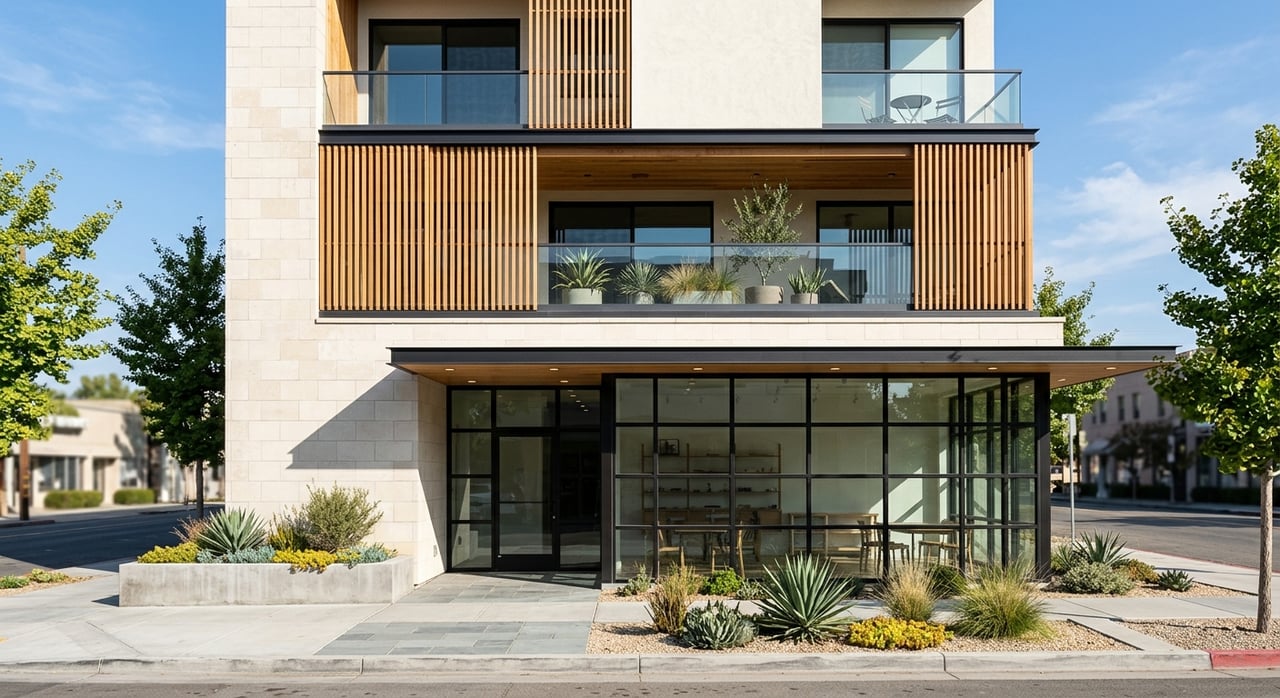
Based on the city’s TOD and live/work planning language, the most natural fit tends to be small-scale uses that benefit from walkability and transit access. Think in terms of a small office, creative studio, showroom-style retail, or artisan production. These uses generally align better with the intent described in Austin’s planning documents.
By contrast, if your business activity is minimal enough to fit within standard home-business rules, a conventional home may offer a simpler path. The best choice depends on how visible, operational, and customer-facing your work needs to be. For many buyers, the question is less about lifestyle branding and more about legal fit.
A Smarter Way to Search in Central East Austin
If you are serious about live-work living, it helps to begin with the right map, not just the right mood board. Plaza Saltillo, MLK, East 4th through East 7th, and portions of the East 11th, East 12th, and East Cesar Chavez corridors are the strongest places to start. From there, each parcel needs its own review.
A careful search can help you avoid common missteps, especially when a property is being marketed with flexible language that may not reflect current city records. The right opportunity can offer convenience, visibility, and long-term utility, but only if the zoning, permitting path, and CO all support your plan.
If you are weighing a mixed-use purchase in Central East Austin, working with an advisor who understands both residential context and commercial considerations can make the process far more efficient. For tailored guidance on East Austin opportunities, connect with Nina Seely.
FAQs
What does live-work mean in Central East Austin?
- In Central East Austin, live-work generally refers to property that combines residential space with commercial, office, retail, or light-production use, but the exact legal meaning depends on the parcel’s zoning, overlays, and city approvals.
Where are live-work properties most realistic in Central East Austin?
- The strongest live-work possibilities are generally in Plaza Saltillo TOD, MLK TOD, and corridor parcels along East 4th through East 7th, plus parts of the East 11th, East 12th, and East Cesar Chavez corridors rather than interior single-family blocks.
What should buyers verify before purchasing a live-work property in East Austin?
- Buyers should verify zoning, overlays, site plan requirements, compatibility standards, parking strategy, and whether the current Certificate of Occupancy matches the intended use.
Why is the Certificate of Occupancy important for East Austin live-work property?
- The Certificate of Occupancy confirms the legal use of the building, and if it does not match your intended use, you may need a change-of-use process before operating a business there.
How is a live-work property different from a conventional home in Austin?
- A live-work property often requires more pre-closing diligence because city review may involve zoning verification, site-plan review or exemption, compatibility questions, and an updated Certificate of Occupancy.
What kinds of businesses fit best in East Austin live-work spaces?
- Based on Austin planning language, the best-fit uses are usually small-scale offices, studios, showroom-style retail, or artisan production that benefit from walkability and transit access.