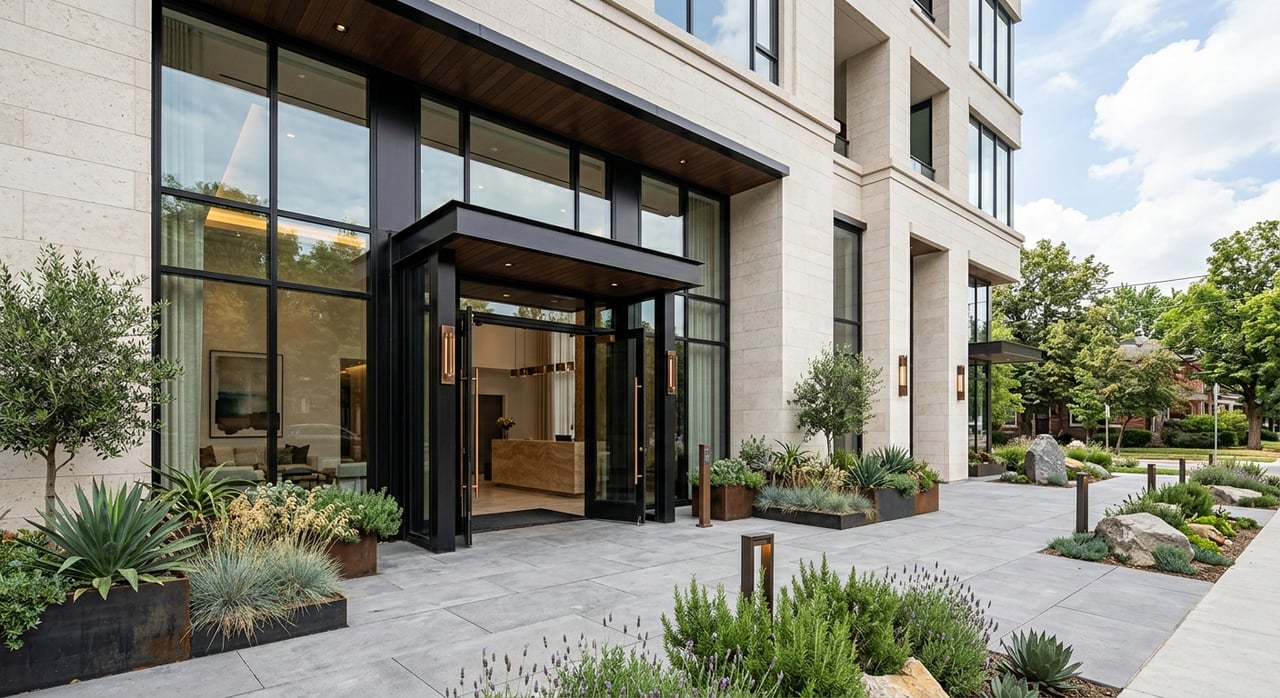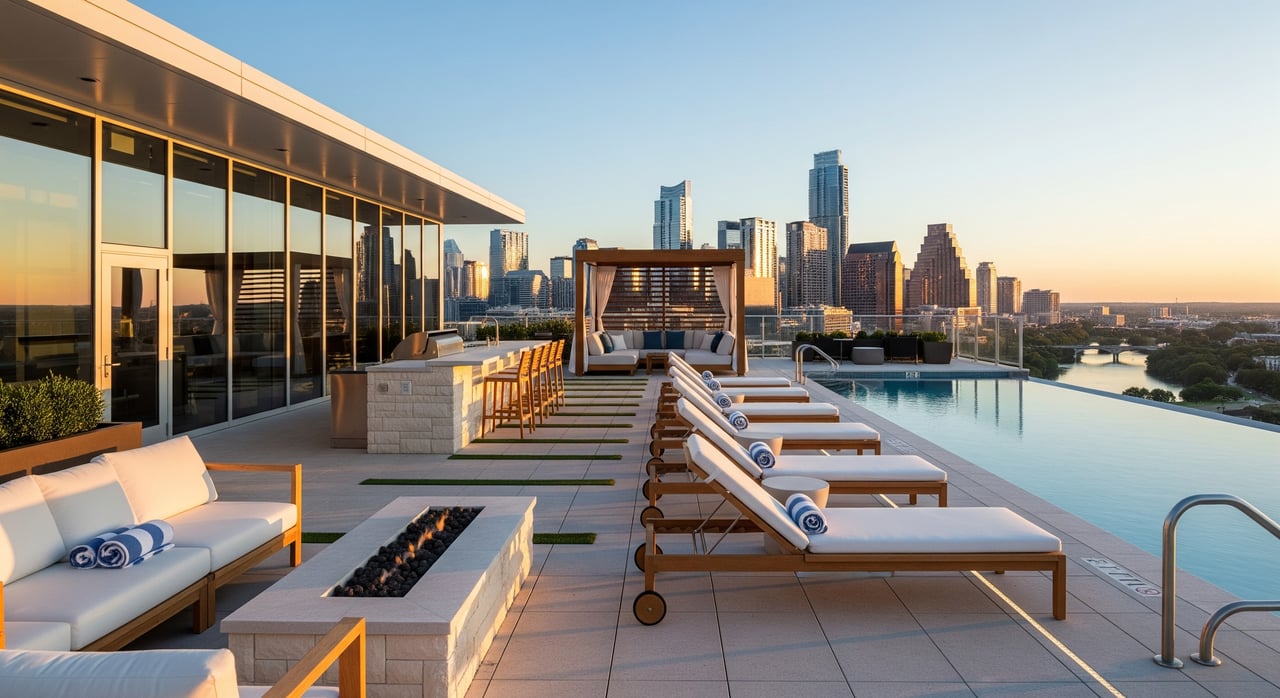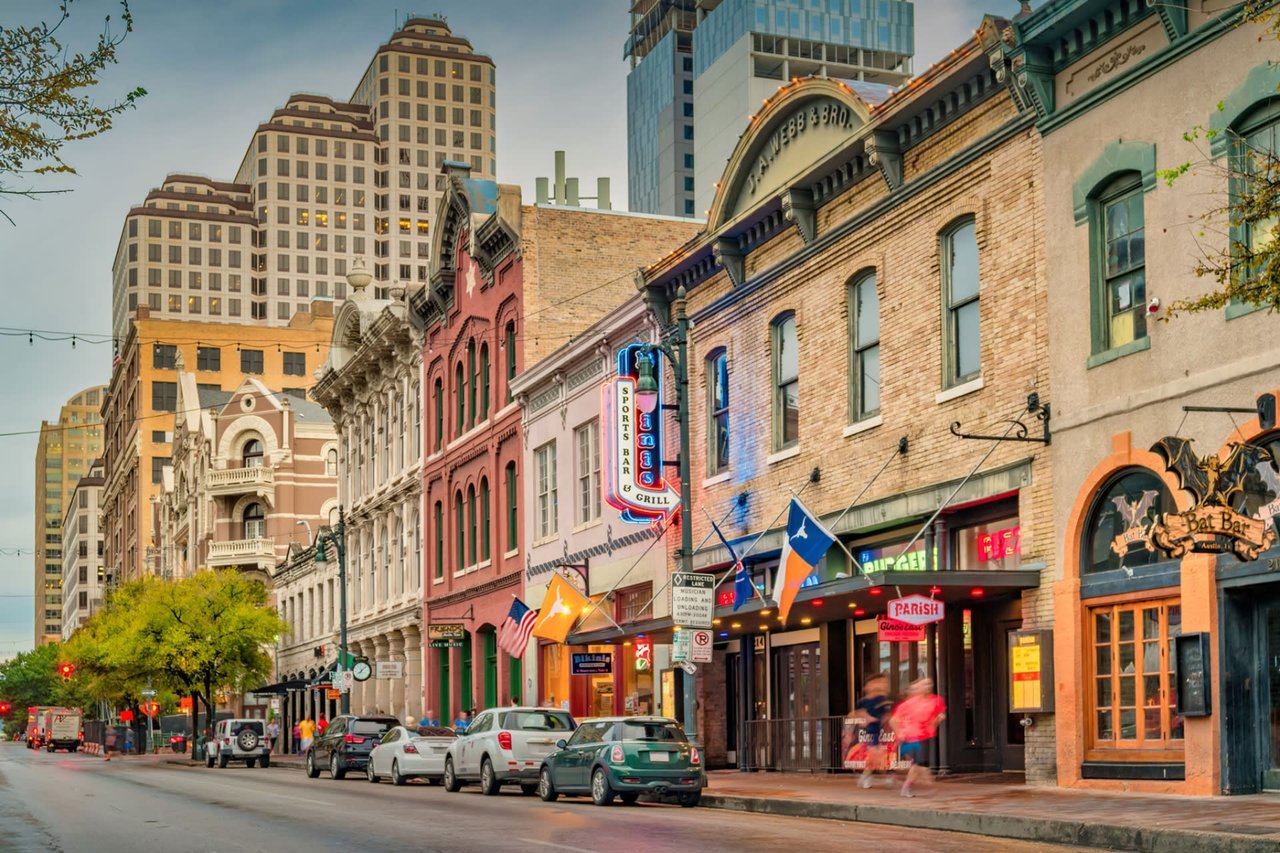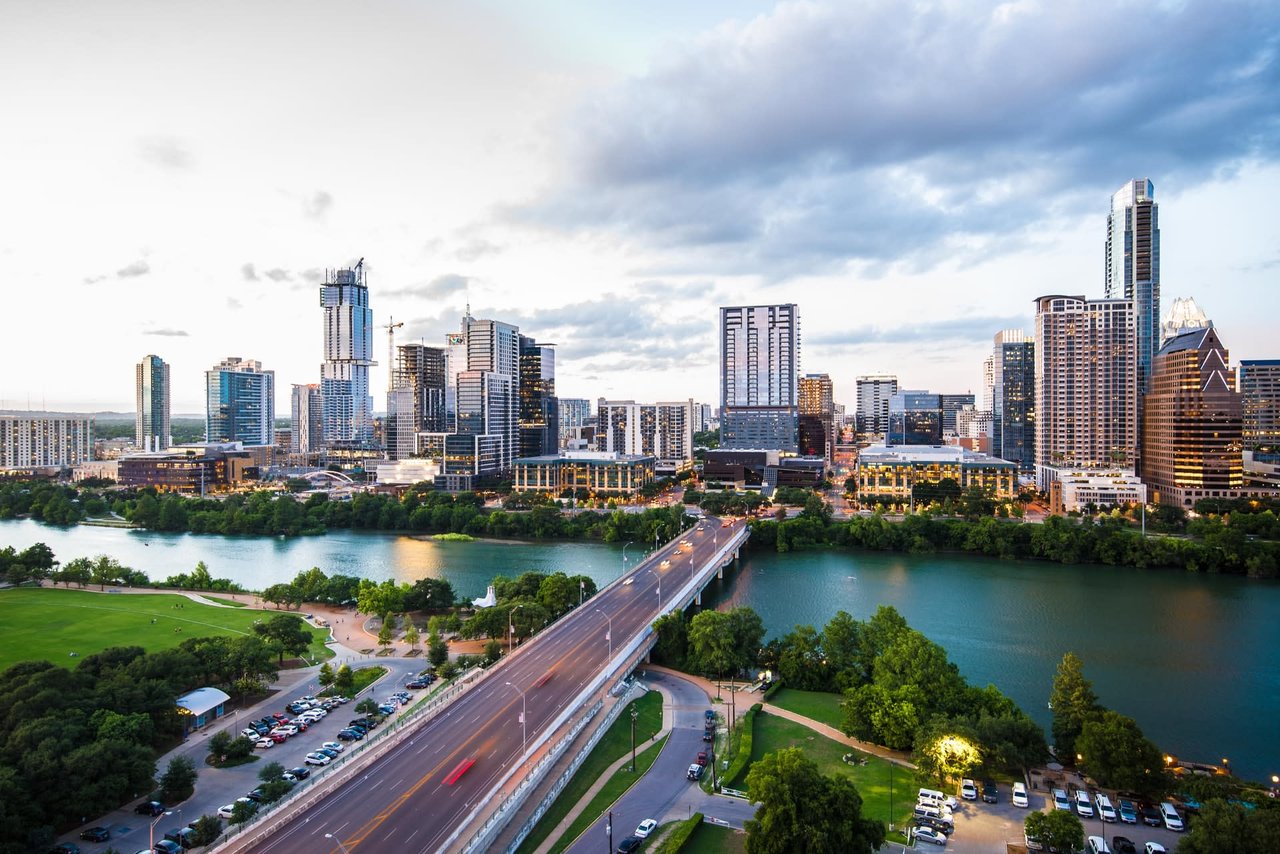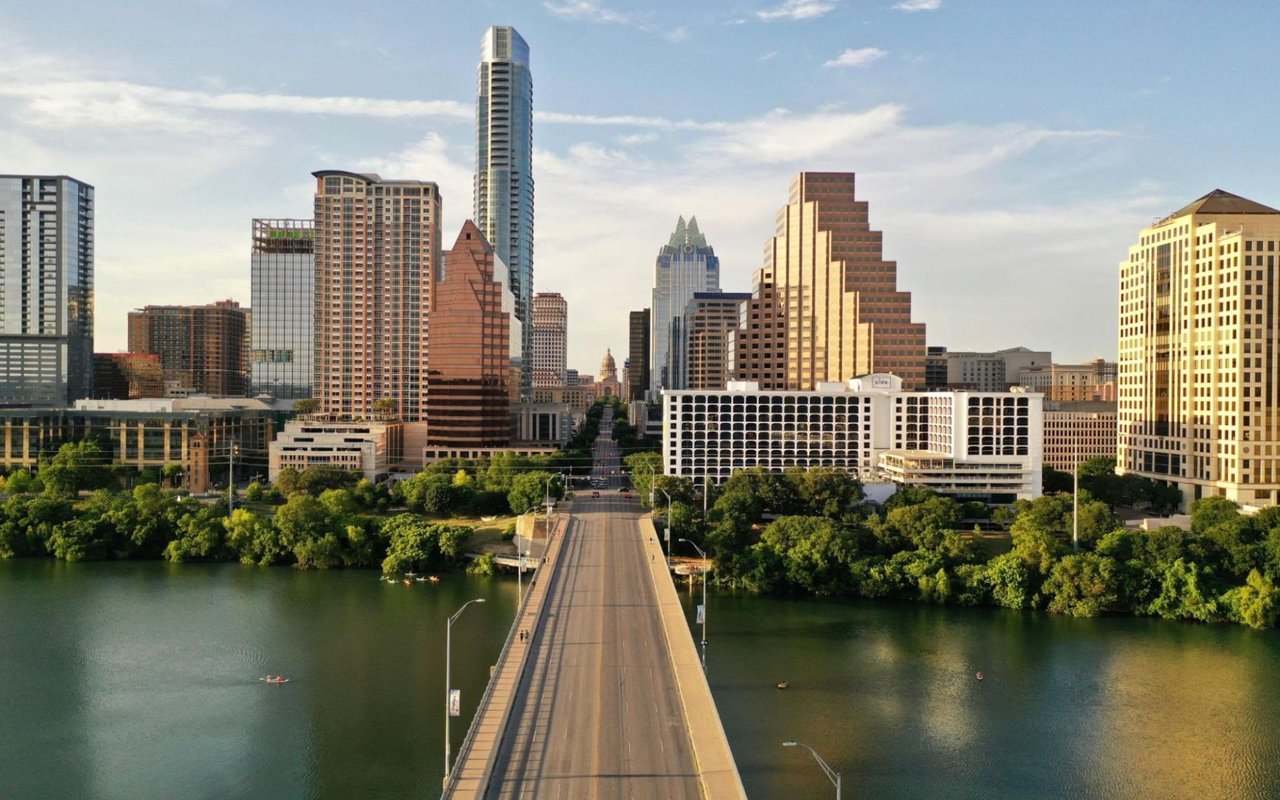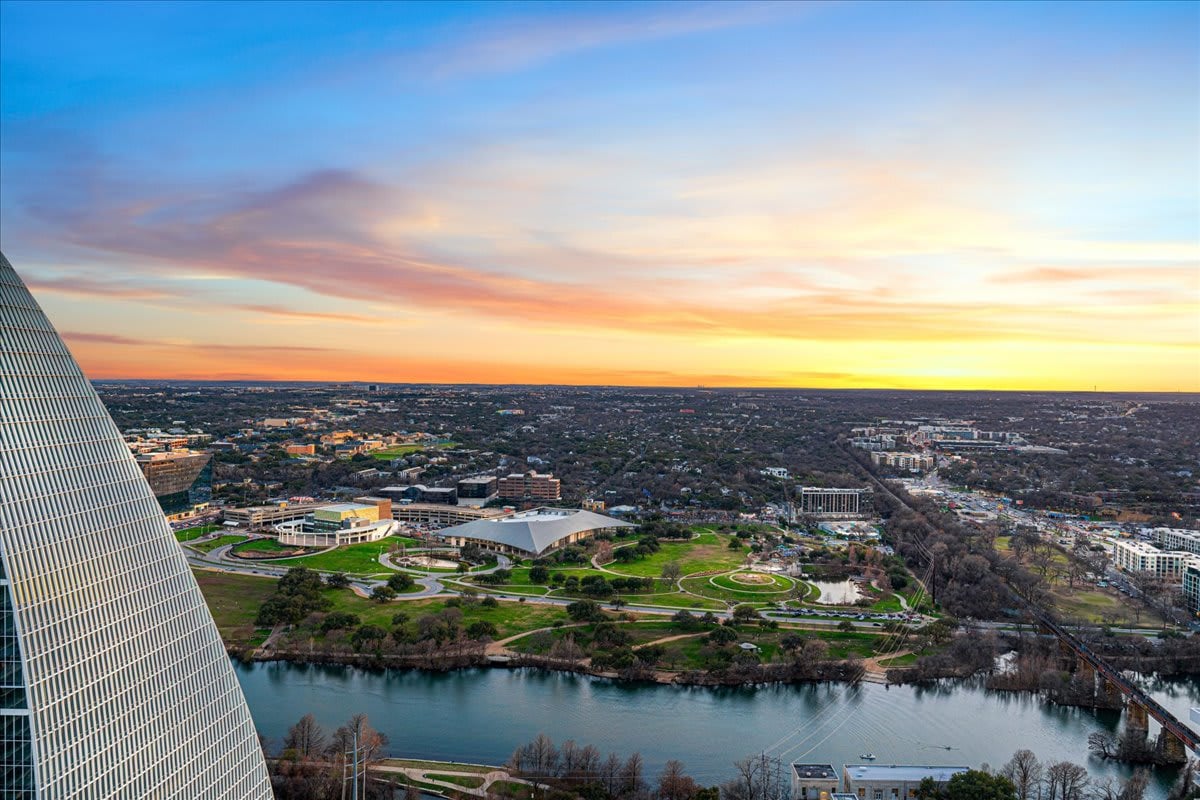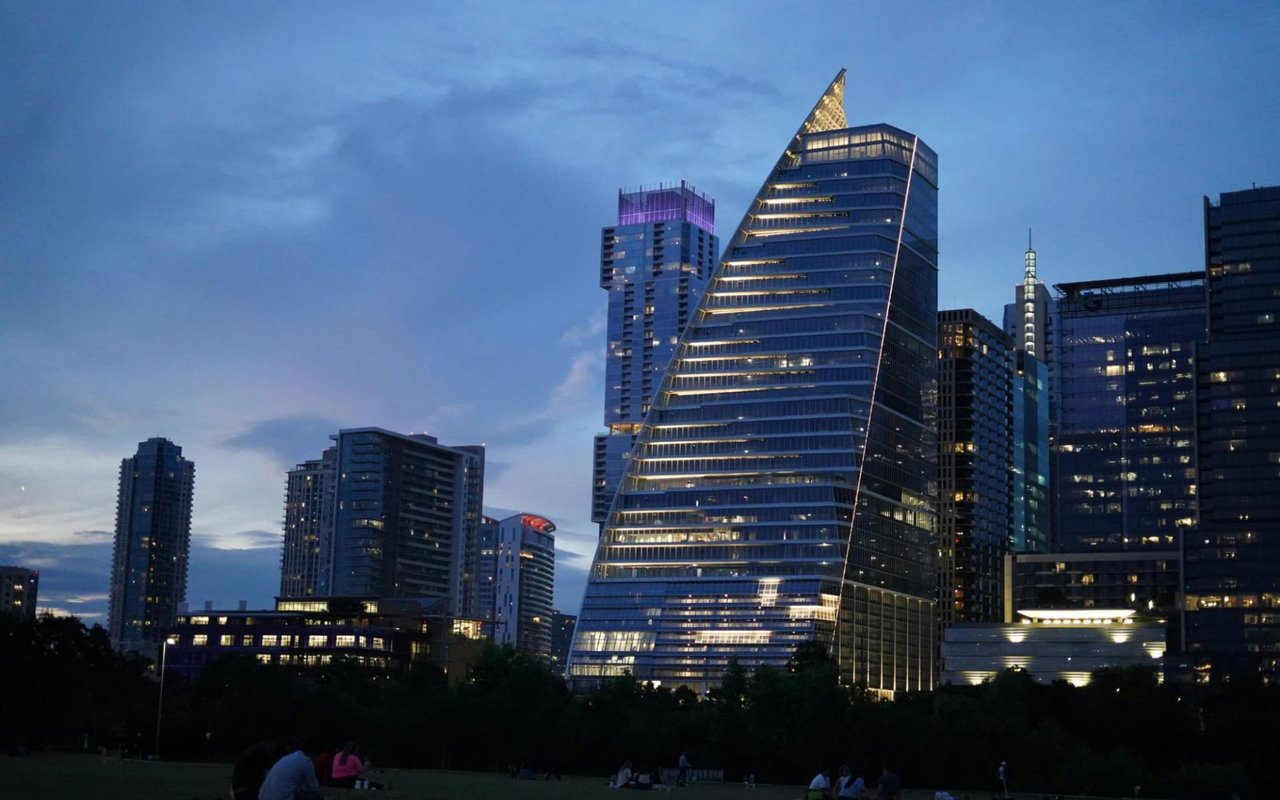
On the 200 block of Congress Avenue, a concrete barrier now does the job that flex posts and rubber curb stops used to do. The bike lane stays behind it. In front of the Austonian it bends behind the drop-off zone, so cars pulling in for residents don't have to cross the bikes and scooters that pour down toward the lake. A block south, the 100 block got a new southbound right-turn lane at Cesar Chavez Street and wider bike lanes rebuilt behind the curb.
These are the first finished pieces of the Congress Avenue Urban Design Initiative. They are mostly traffic changes. They sort bikes, cars, scooters and people on foot more cleanly at the busiest end of the avenue. The part of the plan that hands curb space to café tables and people standing around starts on the next block up, between Third and Fourth. Crews were preparing to move onto that block once Austin City Limits wrapped up this month.
What the First Blocks Actually Got
The city's project StoryMap uses a narrow definition of "substantially completed": the wider pedestrian space, upgraded bikeways, new planting areas and roadway work are done. Landscaping and tree lighting come later, in future phases. So the 100 and 200 blocks are finished as working street, and a few trees and lights may still show up on them later.
| Block | Cross streets | Status as of mid-October | Main change |
|---|---|---|---|
| 100 | Cesar Chavez to 2nd | Substantially complete | Southbound right-turn lane, bike lanes rebuilt behind the curb |
| 200 | 2nd to 3rd | Substantially complete | Concrete bikeway barrier, bikeway routed behind the Austonian drop-off |
| 300 | 3rd to 4th | Slated to begin after ACL | Parking bays become pedestrian space |
| 400 | 4th to 5th | Planned | Parking bays become pedestrian space, Mexic-Arte corner |
Both finished blocks also got benches, bike racks, trash and recycling bins, and new planting beds. The beds give existing and replacement trees more soil, which should help them stay healthy and live longer. If you walk to Patika Coffee in the lobby at 100 Congress, or to the food hall at Fareground at ONE ELEVEN Congress, you are already on rebuilt pavement.
A line in the 200-block plan reaches well beyond Second Street. The city designed this block, and the 300 block after it, to work with the future Project Connect rail line planned for Third Street. So the curbs going in now are shaped around a crossing that doesn't exist yet.
The 300 Block Is Where the Curb Moves
The design for the block between Third and Fourth changes how the street is divided up. The parking bays on both sides of the 300 block become pedestrian space, which the plan sets aside "for the purposes of dining, shopping, and other street life." The same concrete bike barrier from the 200 block continues north.
The new space is built for storefronts to use. When the project broke ground in January, Community Impact described "programmable storefront activation zones." These are permanent features along the building fronts where sidewalk cafés and display racks can go, with a clear walking lane kept open. The city hasn't said which businesses will use them or how.
On the 300 block, that new frontage starts at the corner where Tacodeli runs its downtown location at 301 Congress. Austin Sports Club opened Sept. 10 a few steps east at 205 E. Third St., which puts the Third Street corner next to one of downtown's newest openings just as construction arrives.
The 200 block was substantially complete by mid-October, about three months after work started there in mid-July. Amalia Carmona, senior director of urban design at the Downtown Austin Alliance, told MySA that crews were gearing up to start the 300 block once the Austin City Limits Music Festival ended. She also explained why the schedule can slip:
"A lot of people come together to Congress and we want to make sure those continue to thrive throughout construction."
In the same interview, Carmona said each block takes about three months. Bad weather can push that back, and so can the protests, road races and special events that regularly fill the avenue. If the 300 block keeps that pace, the work between Third and Fourth will run into the new year.
Then the Mexic-Arte Corner
The 400 block, between Fourth and Fifth, follows the same plan: parking bays become pedestrian space, and the concrete bike barrier continues. Its north end is different. Fifth Street crosses Congress there as part of the Mexican American Heritage Corridor, which runs along Fifth from Republic Square to Plaza Saltillo. Mexic-Arte Museum sits on the southeast corner. The city's design calls for expressing Austin's Mexican heritage in the wider sidewalk in front of the museum and at each corner of the intersection.
That corner is already one of the busiest gathering spots on the avenue. Mexic-Arte at 419 Congress uses it for its annual Viva La Vida Festival and Parade, and this year's procession was scheduled to finish at Fourth and Congress. Houndstooth Coffee's Frost Downtown café at 401 Congress sits at the block's south end. Between the two, the 400 block is likely to show most clearly what the wider sidewalks are for once it's finished.
The current schedule depends on which source you read. The city's Transportation and Public Works project page expects Phase 1 to wrap up by summer 2027. MySA's October reporting reads the city's project documents as pointing to fall 2027. The funded phase runs from Cesar Chavez to Seventh Street, and 2027 is the safe answer.
Living Alongside a Moving Work Zone
The work moves north one block at a time, so the trouble spot shifts every few months while the basic rules stay the same. These are the parts that affect a daily walk, ride or drive:
- One lane stays closed for the whole project. The StoryMap says one vehicle lane on Congress will be closed for the full construction period.
- The avenue isn't expected to close outright. Most work happens behind lane closures. Short, one-direction closures at intersections may be needed. In rare cases, overnight work may close a block for the night, scheduled on quieter nights and away from special events.
- Sidewalks and doors stay open. The city says pedestrian access and access to businesses and buildings will be maintained, and routes may shift as work moves. In August, KXAN reported crews working from 9 a.m. to 4 p.m., with the area treated as an active work zone around the clock.
- Alerts come by text. Text "ATX CONSTRUCTION" to 512-890-3099 for closure and construction updates.
The storefronts along the route get support too. The Downtown Austin Alliance runs a Construction Impact Relief Grant for eligible downtown storefront businesses on construction corridors or haul routes. It offers funding, technical help, marketing, signage and temporary installations. MySA reports reimbursement matches of up to $10,000, in two tiers depending on whether a business has had construction outside its door for more or less than a year. Businesses facing the next block hear about it ahead of time through pre-construction meetings with the city and the Alliance, emailed notices, flyers and a text channel.
December Happens Uptown
The holiday season on Congress will take place several blocks north of the work. The Downtown Austin Alliance's Holiday Sing-Along & Stroll is set for Saturday, Dec. 5, from 5 to 8 p.m. Visit Austin lists it on Congress between Eighth and 11th streets, the stretch that runs up toward the Capitol. That puts the evening's crowd well north of Seventh Street, where the funded phase ends, and further still from the Third and Fourth Street blocks under construction this winter.
The city hasn't announced a holiday pause in construction. Its project guidance only says phasing may change for special events. In practice, a December walk down the avenue will cover three kinds of street. North of Seventh is the old Congress, decorated for the season. The work zone sits between Third and Fourth. South of Third, two finished blocks run down to the lake with their benches and concrete barriers in place.
The next year of Congress Avenue construction will reshape how the ground floors of the 300 and 400 blocks are used, and that matters to anyone who owns, leases or lives above them. If you're weighing a downtown condo, a retail lease or an investment on the blocks in line for wider sidewalks, the team at Legends Real Estate would be glad to walk the corridor with you and talk through what's changing on each one. Work With Us.